
Crush Strength
Mechanical Behavior of Gaskets
In the previous issue, we introduced what crush strength is, and it is related to the gasket thickness, operating (or test) temperature, as well as the inherent characteristics of the material itself.
Gasket Thickness
When selecting gaskets, people often prioritize material and dimensions, yet easily overlook the seemingly simple parameter of "thickness". In fact, there is a direct and crucial connection between gasket thickness and crush strength. Choosing the wrong thickness may lead to premature crush failure even if the material is of high quality.
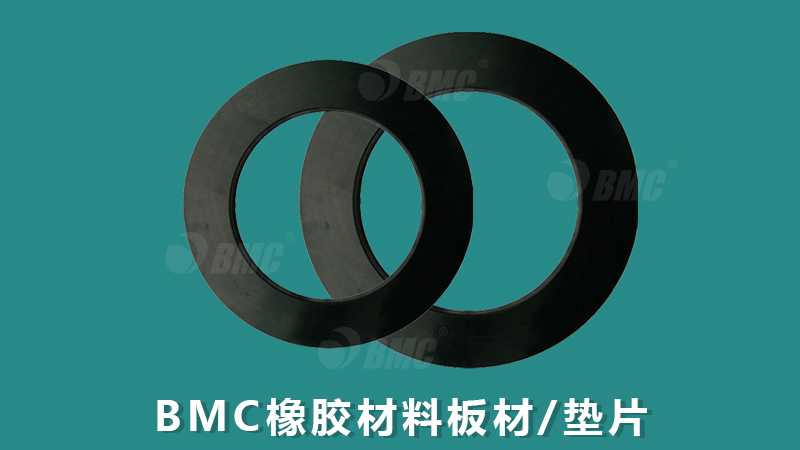
BMC Rubber Sealing Sheet/Sealing Gasket
For example, the compressive strength of a 1.5mm-thick fiber-reinforced rubber sheet at room temperature is 110MPa, while that of a 3mm-thick fiber-reinforced rubber sheet is only 60MPa; the compressive strengths of gaskets made of the above materials at 300℃ are 72MPa and 38MPa respectively.
Q: Why does gasket thickness have such a significant impact?
A: Because the uniformity of stress distribution varies.
Thin gaskets have good rigidity, allowing stress to be evenly transmitted to the entire sealing surface, and local stress concentration is less likely to occur, thus having a stronger load-bearing capacity. Thick gaskets have weak deformation resistance; when compressed, there is a large stress difference between the surface layer and the middle layer, and the middle layer is prone to excessive compression or fracture first, leading to a decrease in the overall load-bearing capacity and premature attainment of the crush limit.
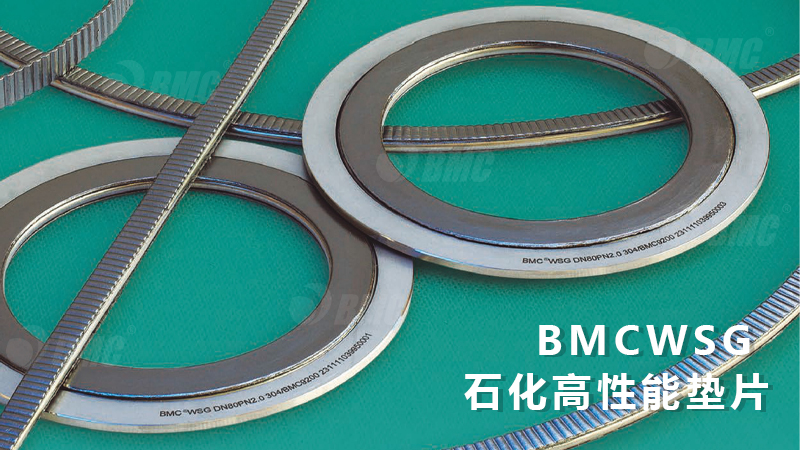
BMCWSG: Suitable for Sealing Flange Surfaces with Defects
In actual selection, the thickness should be considered in combination with the working pressure: for high-pressure working conditions (such as chemical pipelines), thin gaskets of 1.5-2mm are preferred to avoid crushing; for low-pressure working conditions (such as water supply and drainage pipelines), 3mm-thick gaskets can be selected to balance sealing performance and safety.
Therefore, when choosing the gasket thickness, we should not only consider "whether it can seal", but also predict the crush risk in combination with the working pressure, so as to make the sealing system more stable.
Ingenious Seal Mastery
For sealing leakage issues, Baohua provides solutions. If you have any doubts about sealing technology, please pay attention to Suzhou Baohua and feel free to consult, comment, or leave a message! Thank you all! We will continue to talk about crush strength in the next issue, see you next time!


 Email:[email protected]